

Brick by Brick
What to read when you miss your phone

First I bought a brick and then Erin bought a brick. If you don’t know what a brick is just read this sentence several times with your full concentration and an ad will appear on your phone telling you that the brick can change your life. I hate to be like a phone ad but it’s kinda true for me. You tap your phone to this lego-like plastic box and your phone shudders and everything you don’t want is gone. Goodnight Instagram, goodnight Substack, goodnight Safari, goodnight email.
Erin and I tell each other how long we’re bricked for, although we very quickly learned from our teenagers never to say “I’m bricked” when we can’t look something up. Or at least never to say it around them. Apparently, “I’m bricked” means “I have an erection.” It might be the wrong name for this little item, but it might be the right one. I am pretty excited about it all! Although when I’m bricked (sorry kids), I actually feel the opposite of excitement. Sometimes confused. Sometimes sad without my doses of distraction. But sometimes really calm.
When bricked (sorry again), my phone can still play me music or podcasts or take photos of my hike or a flyer that says, “Yes You Can Sing”. (Even me? We’ll see!) I can text. I can call. I block all the places my fingers twitch toward without me consciously asking to look at them. All the places where longing lies.


I know the internet is full of good things, too. Like this carrot almond cake, which I made for Passover and Erin made for Easter. It’s a very ecumenical cake. It cares about both freedom and resurrection. This morning, Erin texted: “Has there ever been a better cake?” You could make it for any type of dinner, denominational or non. The glaze needs more lemon juice than the recipe calls for.
But despite the good things – or because of them – the internet isn’t working for my brain at this particular time. It makes me more unhappy than other people, and by other people I mean all the imaginary healthy people in my head and also Adam, my husband, who can spend hours on the internet without despair, just becoming a Queen Bee, reading about the Knicks, sending some emails, laughing at some humor, learning a thing or two. Not me. My brain starts out reading something interesting and then it’s clicking around, scanning for ways to feel bad about itself and I can’t stop.
The brick helps me stop, but I don’t always know what to do next. When I miss my phone, I’ve been turning to book-length essays, finding comfort – even thrill -- in accompanying someone else’s mind as they grapple with a question that has no easy answer. Drifting in the wake of their intelligence and focused attention, my restive mind remembers the pace of contemplation.
A few years ago, I was in a Yemini restaurant in Brooklyn with my friend Jenny P, an artist. We were catching each other up on the fifteen years since we had babies at the same time in the same town. Jenny showed me a photo of a grappling hook. She said that to make art while being a mother has felt like throwing out the metal claw of a grappling hook onto a frozen lake and hauling her way toward time and space. It felt that physical and difficult and essential.
That image seemed really important and afterward to keep it in mind, I wrote “Grapple” on a sticky note in my office.
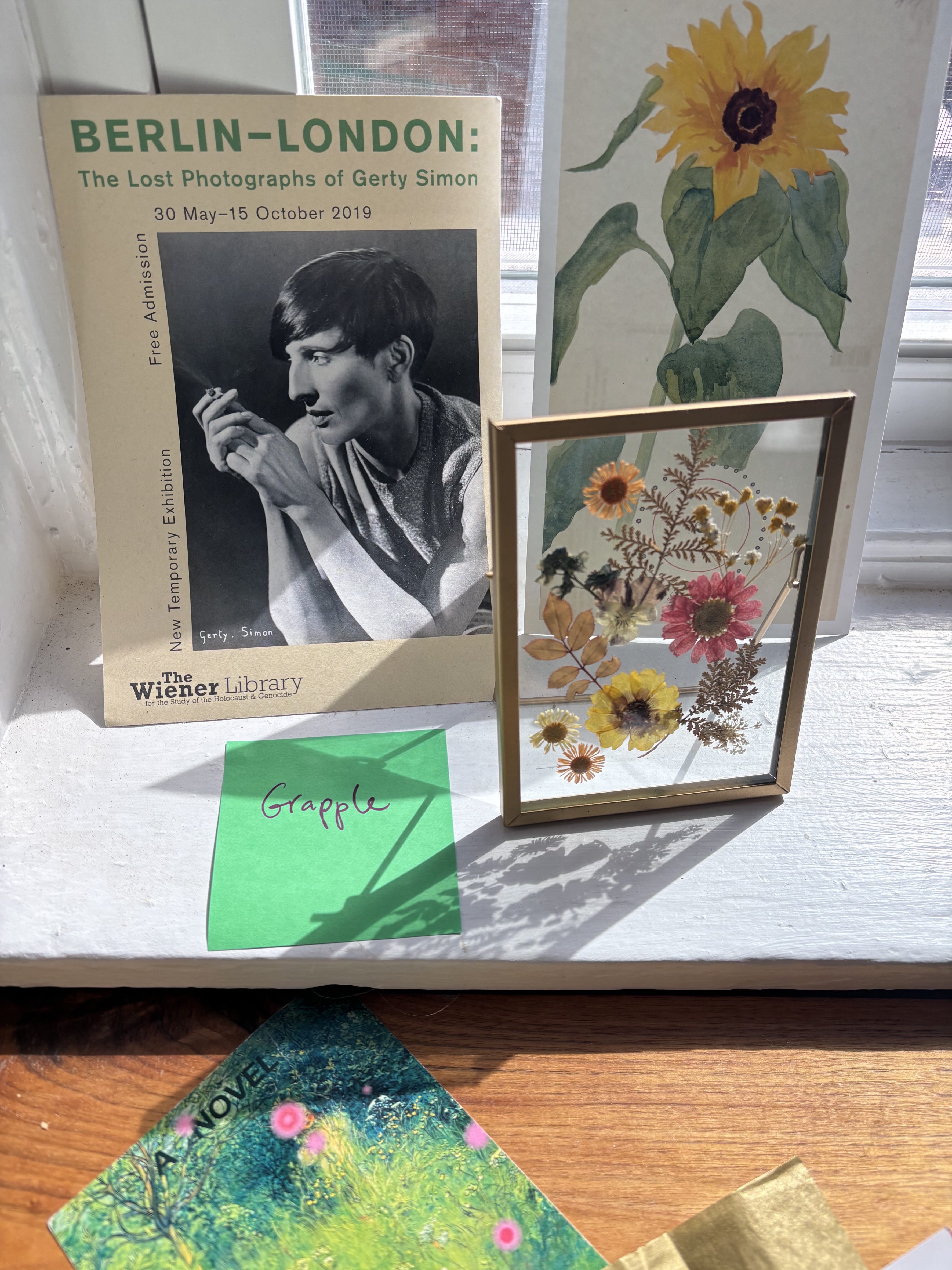
I like the way Lauren Markham grapples with how we memorialize what has been lost to the climate emergency in Immemorial.
I like the way Claire Dederer grapples with how we can or should enjoy art made by bad people in Monsters: A Fan’s Dilemma. I like that I don’t need to agree with everything to enjoy her grapple.
I like the way Deborah Levy grapples with how to find both belonging and belongings in Real Estate.
I’m only halfway through, but I like how in The Light Room, Kate Zambreno, grappling with two small children during the pandemic shutdown, can jump in a single paragraph from an exhausted search for Montessori toys to the photographs David Wojnarowicz took right after Peter Hujar died of AIDS.1
I like how Amy Fusselman grapples with play and risk in Savage Park and how Annie Dillard grapples with why we’re alive in For The Time Being.
Brick is just one of my internet blockers. I also use Opal and Self Control and Freedom.2 I’ve been grappling for so long with the question: How do you throw out a grappling hook to heft yourself out of the internet, especially when the internet is full of fascination and horror and connection and work responsibilities and really good newsletters and funny babies and reels? How do you dip back in?
These questions used to make me feel ashamed. Somehow I wasn’t doing it right. Where was my will power? But now we’re all talking about it and that makes me really hopeful.3 I don’t believe that living with the internet is something we should figure out alone. Let’s tell each other how the internet makes us feel, all the good and the bad, the necessary and the beautiful and the corrosive. Let’s share our grapples like we share memes. Let’s hold consciousness raising groups to understand the collective online body. Let’s write Our Scroll, Our Selves. I can’t wait to see what new ways of living we’ll build out of bricks and opals and almond cakes.
xo Heather
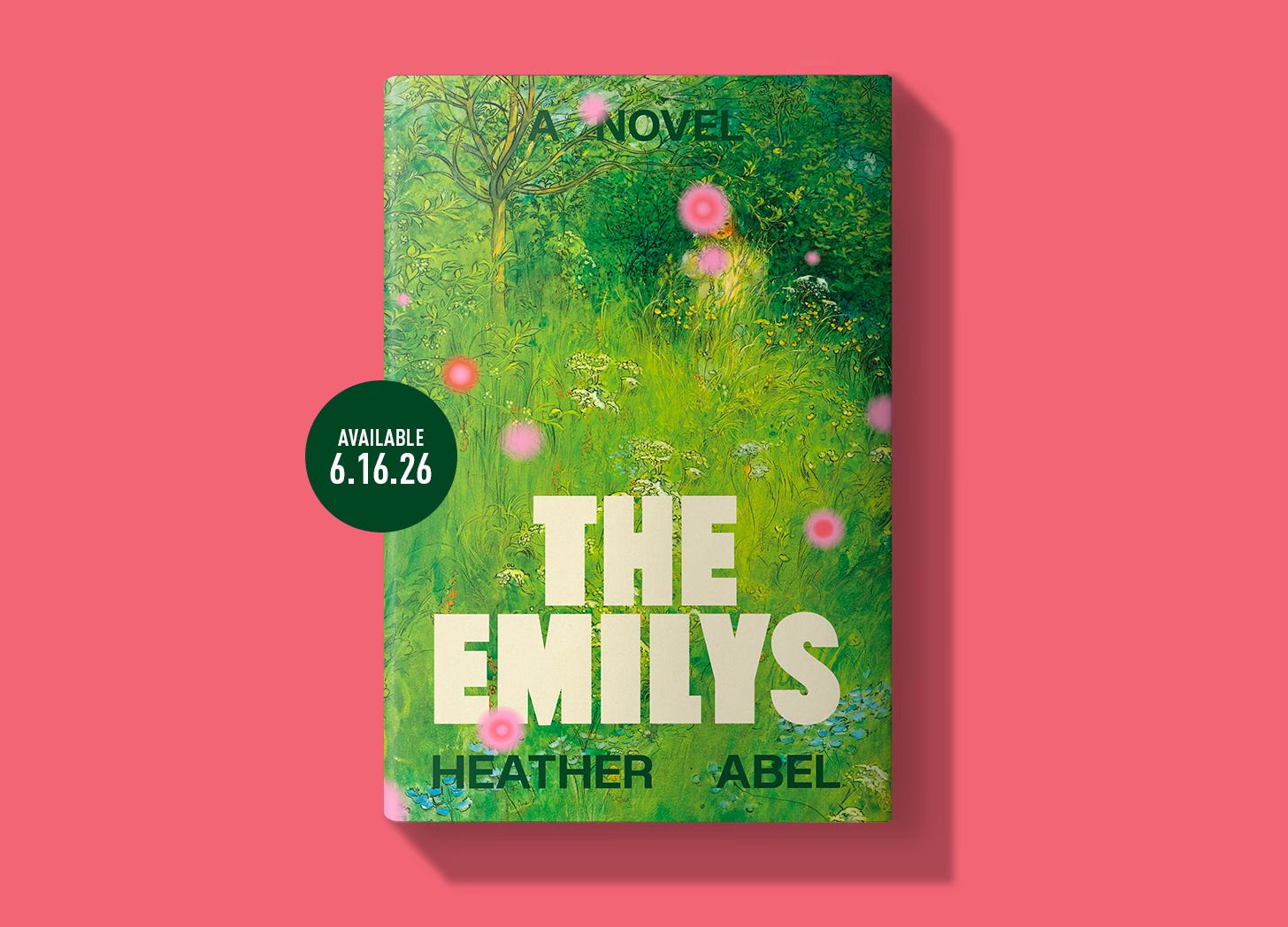
You can preorder The Emilys right here!
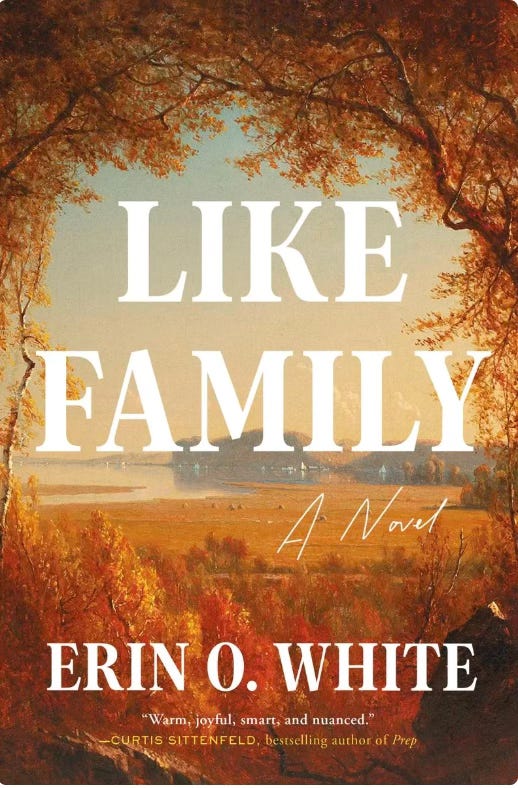
And you can buy Like Family right here!
Have you seen the movie Peter Hujar’s Day? It’s weird and wonderful and slows down time like an anti-Internet.
Opal is designed like a video game and I find it nearly impossible to use, but it successfully blocks one site for me on my phone. Self Control works on Chrome but not Safari, but you can’t take Safari off of a Mac. Also sometime it just doesn’t work. Freedom is my firstborn internet blocker. I installed it in 2008 and I’ll always be grateful to it. But I also find that I tend to binge when my time is up, like a kid in a candy store. I don’t have that problem with Brick.
love this one...